The Problem Nobody Tells You When Booking a Golf Tour in Italy
You’ve planned everything perfectly:
- World-class golf course ✓
- 5-star hotel ✓
- Michelin-starred restaurants ✓
- Significant budget ($2,000-$5,000 per person) ✓
Yet three weeks after returning home, when someone asks “How was Italy?”, your answer is: “Beautiful… we played golf, ate well…”
Exactly like last year in Spain. And the year before in Portugal.
It’s not your fault. The golf tourism industry sells the same packages to everyone, calling them “personalized.”
What Separates a Forgettable $3,000 Golf Trip from One You Talk About for Years?
According to ENIT 2026 data, Italy ranks in the top 3 European golf destinations. Luxury tourism spending reached €54.2 billion in 2024.
But here’s the truth that matters:
It’s not the quality of the courses that makes the difference. Lombardy, Lazio, and Tuscany already have excellent golf clubs. It’s not the hotel either. Italy has 771 five-star properties.
The difference lies in what happens OFF the course.
The moments that:
- Make your group stop looking at their phones
- Create that story you’ll tell for months
- Make you say “I didn’t think that was possible”
- Actually justify that $5,000 spend
The Gap: What Everyone Offers vs. What Actually Creates Value
What all tour operators offer:
- Course booking
- Standard transfers
- Dinner at a restaurant anyone can book
- Maybe a “group” guided tour
What actually creates a memorable experience:
- Access to places/experiences normally unavailable
- Moments of genuine amazement (not “standard entertainment”)
- High-level personal interactions
- The feeling of having lived something unrepeatable
1. The Experience That Makes You Forget You’re Tired After 18 Holes
It’s 10 PM. You’ve played all day. Normally you’d be heading to your room.
Instead, you’re sitting at the table completely absorbed by what’s happening in front of you. Someone like Darus, the Mentalist, is reading your group members’ thoughts. Not “alleged” magic tricks. Mentalism experiences that directly involve you and your travel companions.
Why it works:
- Zero passivity: you’re not watching a show, you’re part of the experience
- Conversation guaranteed: you’ll talk about it for days (and post it on LinkedIn)
- Works in English: perfect for international groups
- Scalable: from 10 to 200 people, with different formats
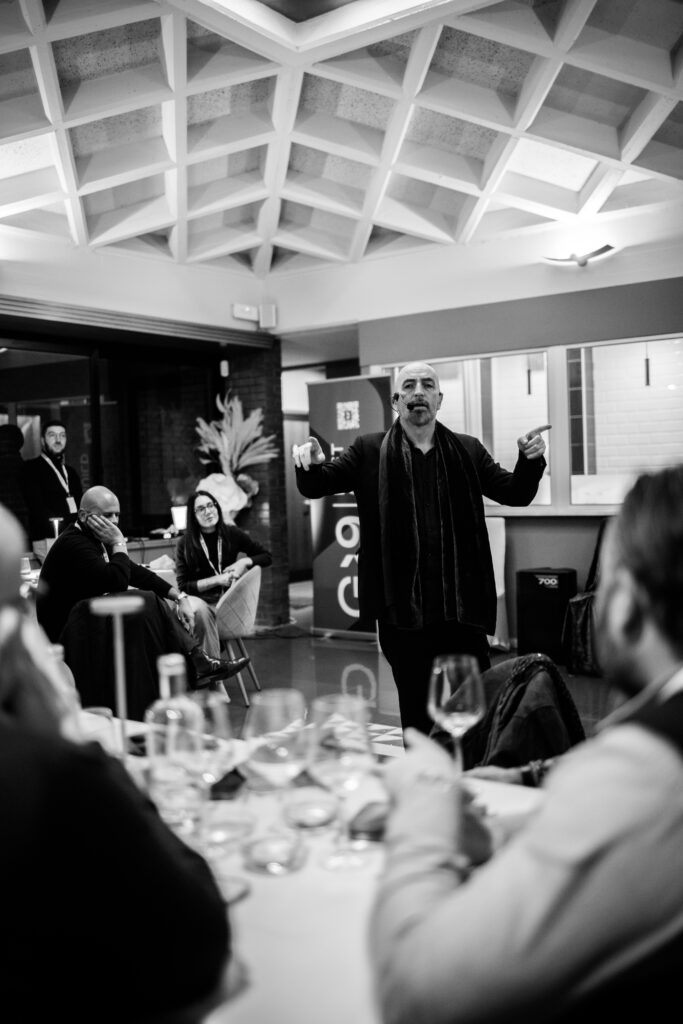
The three available formats:
- Roaming close-up during dinner (45-60 minutes)
- Mentalist moving between tables
- Personalized experiments for small groups
- Doesn’t interrupt the dinner flow
- Creates anticipation for what’s happening at other tables
- Dedicated show after dinner (40-50 minutes)
- All participants involved
- High collective emotional impact
- Perfect as the evening’s culminating moment
- Ideal for corporate groups and incentives
- Hybrid formula (total 90-120 minutes)
- Close-up during dinner + show after
- Complete and progressive experience
- Maximum engagement and surprise
- The format that truly leaves a mark
What makes mentalism different from “another entertainer”:
- It’s not children’s magic (it’s applied psychology)
- It’s not “tricks and deception” (it’s behavioral reading and suggestion)
- It’s not passive (every person is potentially a protagonist)
- It’s not replicable at home (requires mastery and twenty years of experience)
The result?
On Monday morning, when your colleagues ask about the golf weekend, you won’t say “we played well.” You’ll say: “You won’t believe what happened Saturday night…”
2. The Access That Money Normally Can’t Buy
Not “winery visit.” But:
- Barolo: tasting from historic reserves not in the catalog
- Brunello: access to the producing family, not the tour group
- Franciacorta: personal sommelier who builds the experience around your specific tastes
Why it matters:
You’re not buying wine. You’re buying the story that starts with “The producer let us taste a bottle he only keeps for himself…”
What to expect:
- Zero other tourists present
- Direct conversations with producers
- Real understanding (not marketing) of the process
- Exclusive purchasing opportunities
3. The Empty Museum (The $10,000 Experience That Costs Less Than You Think)
Rome, Florence, Milan: after closing hours.
The difference between normal tour and after-hours tour:
| Normal Tour | Exclusive After-Hours Tour |
|---|
| 200 people in the room | Only your group |
| Guide repeating the script | Guide answering YOUR questions |
| 45-minute rush | All the time you want |
| Photos with strangers in the background | Photos as if the museum were yours |
Where it’s possible:
- Sistine Chapel
- Uffizi Gallery
- Vatican Museums
- Borghese Gallery
- The Last Supper (Milan)
Investment: Less than what you spent on your new golf shoes.
4. True Luxury Isn’t Champagne, It’s Time
Helicopter from the golf course to the city. Not because you’re rich. Because your time is worth more than the ticket.
What changes:
- Lake Como golf course → Milan center: 15 minutes instead of 90
- Rome → Costa Smeralda: 1 hour instead of a wasted day
- Florence → Tuscany courses: 20 minutes instead of traffic
The result:
You play 18 holes in the morning, lunch at a vineyard, visit Florence in the afternoon, dine in Siena. Same day.
5. Regeneration That Actually Works (Not “The Hotel Spa”)
After 18 holes, your body doesn’t want “a standard massage.” It wants:
- Dolomites Thermal Baths: natural thermal water with mountain views
- Amalfi Coast Spa: sea-view treatments with local products
- Milan/Turin Wellness Centers: advanced technology + Italian design
The difference:
You don’t return “relaxed.” You return regenerated enough to want to play another 18 holes tomorrow.
6. When the Michelin-Starred Restaurant Comes to You
Michelin chef. In your villa. Cooking live.
What’s included:
- Menu built around allergies, preferences, curiosities of the group
- Local ingredients sourced the same day
- Explanation of each dish directly from the chef
- Zero lines, zero waits, zero compromises
Why choose it instead of the restaurant:
- Total control of the environment
- Private conversations (no other tables nearby)
- Perfect timing for your schedule
- Ability to ask real questions to the chef
Step 1: Identify the Real Goal
Wrong question: “Which courses do we play?”
Right question: “What will be the moment we’re still talking about at Christmas?”
The 4 types of goals:
- Business/Network: Impress clients or partners
- Team Building: Create bonds within the work group
- Celebration: Birthday, anniversary, important achievement
- Pure Pleasure: You and friends wanting the best possible
Mentalism works for all 4, but differently:
- Business: Demonstrates sophistication + creates shared talking point
- Team: Builds curiosity and interaction among people who barely know each other
- Celebration: Creates the “wow moment” that defines the event
- Pleasure: Offers something no one has experienced before
Step 2: Choose the Base Region (But Not for the Reasons You Think)
Don’t choose based on the course. Choose based on the ecosystem of available experiences.
The 4 golf + experience destinations in Italy:
| Region | Golf Level | Unique Experiences | Ideal For |
|---|
| Lombardy | ⭐⭐⭐⭐⭐ | Milan fashion/design + Lakes + Business | Corporate, high-end business |
| Lazio | ⭐⭐⭐⭐⭐ | Rome history + Vatican + Art | Culture + classic luxury |
| Tuscany | ⭐⭐⭐⭐ | Wine + Art + Countryside | Food & wine + beauty |
| Piedmont | ⭐⭐⭐⭐ | Truffle + Barolo + Turin | Foodies + discreet elegance |
Step 3: Structure the “Peak Moments”
Psychological research is clear: we remember peak moments and the ending.
Winning structure for 3 days:
Day 1:
- Arrival + accommodation
- Golf at premium course
- Normal dinner (jet lag recovery)
Day 2: ← INSERT PEAK MOMENTS HERE
- Golf in the morning
- Experience 1: Exclusive tasting or after-hours tour
- Experience 2 (EVENING): Private mentalism show
(This is the moment that will define the trip)
Day 3:
- Final golf round
- Lunch with a view
- Memorable closing: Private chef or final special experience
Why mentalism goes on Day 2 evening:
- You’ve already built connection in the group
- Energy is high (not Day 1 fatigue)
- Leaves the last day to “process” the experience
- Becomes the talking point for the final day
Step 4: Book Exclusive Experiences FIRST (Not the Courses)
Common mistake:
Book courses → hotel → “let’s see what experiences are available”
Correct approach:
Decide peak experiences → book those → build the rest around them
Why:
- Exclusive experiences have limited availability
- Professional mentalists working in English are few
- After-hours tours require weeks of notice
- Michelin chefs are booked months in advance
Recommended booking timeline:
- 3-4 months before: Mentalism show + exclusive tours + private chef
- 2-3 months before: Golf courses + hotel
- 1 month before: Transfers + tastings + spa
Step 5: Communicate Value (Not the Schedule)
If you send this: “Friday golf, Saturday golf, Sunday golf”
→ Lukewarm participation
If you send this: “The golf is extraordinary. But wait until you see what happens Saturday night. I can’t tell you more, but bring your camera.”
→ Everyone confirms immediately
The secret:
Sell the anticipation, not the agenda.
The 3 Questions You Must Ask Yourself Before Booking
Question 1: “If I could guarantee one WOW moment, what would it be?”
If the answer is vague, the trip will be vague.
Specific answers that work:
- “I want my German partners to say ‘this is the best event I’ve ever attended'”
- “I want my brother to see something he’ll never forget for his 50th birthday”
- “I want the team to talk about this trip all year”
Then ask: “Which experience guarantees that result?”
Spoiler: it’s rarely “a better golf course.”
Question 2: “What do I NOT want to happen?”
Often more important than what you want.
Common answers:
- “I don’t want boredom after dinner”
- “I don’t want people on their phones”
- “I don’t want the usual dinner where we talk about the same things”
- “I don’t want someone to say ‘nice’ instead of ‘incredible'”
Solution:
Mentalism eliminates all of these. By design.
Question 3: “What will make this trip worth $5,000 per person?”
If the answer is “good golf,” you’re overpaying.
Better answers:
- “Stories I’ll tell for years”
- “Connections deepened with the group”
- “Access to experiences I couldn’t replicate”
- “That one moment that justifies everything”
How International Golfers Are Actually Booking Italy (Data from 2026)
According to ENIT research, the typical golfer visiting Italy:
Demographics:
- Age: 35-65 years
- Origin: North America, UK, Germany, Scandinavia, East Asia
- Average spend: $2,000-$5,000 per trip
- Travel style: Groups, prefer mid-to-high level accommodations
What they’re looking for (in order of importance):
- Unique experiences beyond golf (87%)
- Food & wine authenticity (81%)
- Cultural access (76%)
- Wellness activities (64%)
- Premium golf courses (surprisingly, only 5th at 62%)
The insight:
Golf is the anchor. Experiences are the actual value.
Why Most Golf Tour Operators Get It Wrong
They optimize for:
- Course variety
- Hotel star rating
- Restaurant reputation
- Transfer efficiency
They should optimize for:
- Memorable moments
- Genuine amazement
- Unique access
- Stories worth retelling
The result:
They sell “golf trips to Italy” that are indistinguishable from golf trips to Spain or Portugal.
You’re paying for location, not experience.
The Mentalism Advantage: Why It’s Becoming the Secret Weapon of High-End Golf Tours
Here’s what’s happening in the luxury golf tourism space:
Traditional entertainment options:
- Live music during dinner → Nice but forgettable
- Comedian → Cultural barriers with international groups
- Magician → Often too “show-like” and passive
Why mentalism is different:
For the organizer:
- Works seamlessly in English
- Scales from intimate (10 people) to large (200+)
- Flexible format (during dinner, after dinner, or both)
- Creates social media moments
- Zero cultural barriers
For the participants:
- Direct involvement (not watching, participating)
- Intellectually engaging (not just entertaining)
- Conversation starter for days
- Instagram/LinkedIn worthy content
- Sophisticated (not “magic tricks”)
Real feedback from international golf groups:
“We’ve done golf trips for 15 years. This was the first time the entire group was still talking about the same thing three months later.”
— Corporate group from Germany, 2025
“I thought it was just dinner entertainment. It became the highlight of the entire week.”
— Private group from California, 2025
“Our clients specifically asked if ‘the mentalist’ would be part of next year’s event.”
— Event organizer for pharmaceutical company, 2024
The Investment: What Actually Costs What
Let’s be transparent about pricing:
Golf Course Premium (Lombardy/Lazio):
- €150-350 per round per person
- For 3 days: ~€450-1,050 per person
5-Star Hotel:
- €300-600 per night
- For 3 nights: €900-1,800 per person
Michelin Dining:
- €150-300 per meal
- For 3 dinners: €450-900 per person
So far: €1,800-3,750 per person for “the standard”
Now the experiences that actually create memories:
Private Mentalism Show:
- Close-up format: €1,970-2,300 (divide by group size)
- Full show: €2,070-2,370 (divide by group size)
- Hybrid formula: €2,770 (divide by group size)
- Per person in group of 12: €164-231
- Per person in group of 20: €99-139
After-Hours Museum Tour:
- €1,500-3,500 total (depending on venue)
- Per person in group of 12: €125-292
- Per person in group of 20: €75-175
Private Chef Experience:
- €200-400 per person (all-inclusive)